
Table of contents
Growth marketing is a data-driven, experimentation-led approach to marketing that replaces one-off campaigns and gut-feel decisions with a continuous cycle of testing, measuring, and iterating toward a company’s key growth metrics. Instead of betting big on a handful of untested ideas, growth marketing teams run smaller, rapid experiments informed by real customer data, then double down on whatever the data proves works — often formalised into a documented growth model that ties experiments back to a team’s north star metric.
Growth Marketing vs Traditional Marketing vs Performance Marketing
| Growth Marketing | Traditional Marketing | Performance Marketing | |
|---|---|---|---|
| Approach | Continuous experimentation, tested against data | Big, one-off campaigns built on brand intuition | Paid, channel-specific campaigns optimised for direct response |
| Primary goal | Sustainable, compounding growth across the funnel | Brand awareness and reach | Immediate, measurable conversions (leads, sales) |
| Decision-making | Data and experiment results | Gut feel, precedent, or the highest-paid person’s opinion | Real-time campaign metrics (CPC, CPA, ROAS) |
| Time horizon | Ongoing and iterative | Campaign-based, often seasonal | Short-term, always-on for the channel |
| Best fit for | Teams with a growth culture and a clear goal | Brand-led companies prioritising awareness | Teams needing fast, attributable paid results |
Growth marketing helps companies move away from the big bet culture of traditional campaigns and brand marketing practices in favor of a rigorous process that guarantees impact and predictable results. For a deeper dive into everything we’ve learned about growth marketing from working with businesses of all sizes, see our Growth Marketing Guide.
In this article, we explore how it helped HubSpot become one of the fastest-growing software companies of all time, and why you may wish to consider the approach in your business.
The Machine That Fuelled HubSpot’s Growth
HubSpot is one of the fastest-growing software companies of all time. Founded in 2006, it grew to a valuation of over $100 million and a listing on the New York Stock Exchange in just 8 years.
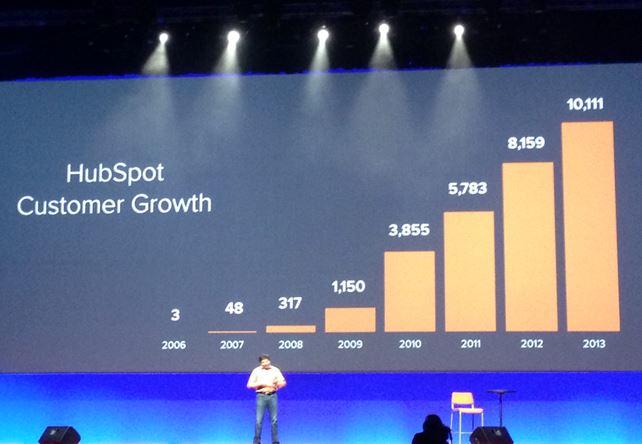
HubSpot Inbound Conference 2014, image courtesy of executionists.com.
A year before going public, HubSpot wanted to grow the new HubSpot Sales product to a $100M line of business. To achieve this, they established a new team focused on marketing and growth, led by Brian Balfour, now one of Silicon Valley’s most prolific growth marketers.

Brian Balfour. Founder, CEO @ Reforge. Previously VP Growth @ HubSpot, Entrepreneur In Residence @ Trinity Ventures.
HubSpot’s Marketing Machine
This post describes how Brian built HubSpot’s growth marketing team, and what he describes as the “growth machine” that was the foundation to its success.
There is no silver bullet or “one thing” you can do to change the trajectory of your marketing team. Growth is not about hacks, quick wins, money, luck, or timing; it is about continually following a proven process.
“Growth has nothing to do with tactics and has everything to do with process. Growth is not about the terminology or the tactics; it’s about a change in our mentality, process, and team.”
Brian Balfour, VP Growth, HubSpot
Following HubSpot’s success, the same approach has been adopted by many of the world’s fastest-growing companies, including Facebook, LinkedIn, Uber, Atlassian, Pinterest, SurveyMonkey, Airbnb, Slack, and IBM.
The discipline has become known as Growth Marketing.
What Is Growth Marketing?
Growth marketing helps companies move away from the big bet culture of traditional campaigns and brand marketing practices in favor of guaranteed impact and predictable results. It does this through three core functions (hat tip to Josh Lachkovic):
-
Deep customer understanding
-
An experimentation process that improves over time
-
Rapid execution
The growth marketing process uses principles from lean manufacturing and agile development to ensure marketing team performance can be continuously tracked and optimized inline with team KPIs. Sometimes called “scientific marketing” or “growth science,” it is a process that applies the scientific method to grow a business.
Growth marketing is a system that helps marketing teams define key objectives and success metrics and translate these high-level objectives into individual actions. As with any business strategy, it ensures:
-
An action plan
-
A narrow focus on the most important things
-
Real individual owners of actions
The basic challenge in strategy execution is to translate broad ideas about what makes you competitive at the organization level into concrete actions for progress at the individual level.
Graham Kenny, CEO Strategic Factors (Harvard Business Review)
Why You Need a Growth Marketing Strategy
There are five key problems with traditional marketing teams that the growth marketing process is designed to solve.
1. Intelligent decisions are not based on assumptions or gut feel.
Traditional marketing teams decide what to do based on assumptions, gut feel, or the highest-paid person’s opinion (aka the HiPPO, for short). Every time you or your team makes a guess, you introduce bias and risk into what you do.
The best marketing teams put tests out into the wild and let the user, their actions, and the data from those actions inform their next steps. You can trust your gut, make some changes, and hope for the best, or use a scientific testing process to make real progress.

2. What works for others is not going to work for you.
Copying what your competitors are doing, or what you see other companies doing online, is not a strategy. There is no “one-size-fits-all” advice when it comes to scaling marketing.
The best marketing teams define a strategy that fits their unique circumstances. Similarly, your marketing strategy should leverage:
-
Your ideal customer
-
Your customer journey
-
Your product/service differentiators
-
Your resource availability
-
Your previous learnings and insights
You need a process to find the unique combination of things that will work for your business.
3. Growth is the sum of a lot of small parts.
There is no one thing that will alter the trajectory of your marketing efforts or dramatically increase results. Implementing the latest marketing tactic or “growth hack” is unlikely to have any material impact on your business long-term. There are no silver bullets.

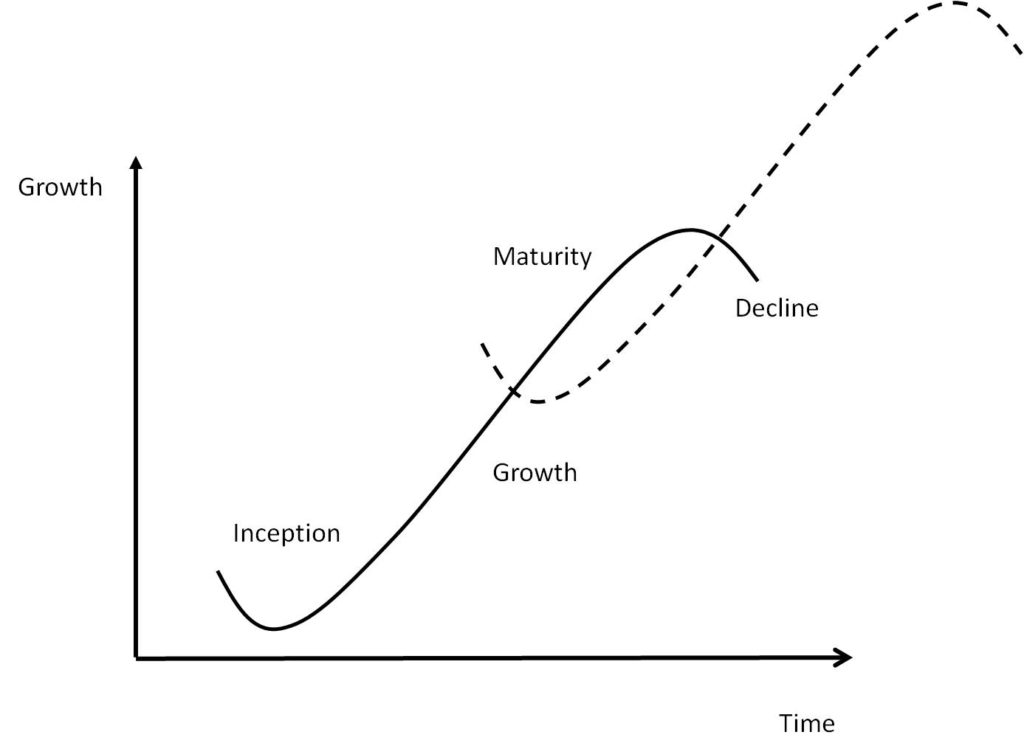
4. The effectiveness of all marketing tactics decreases over time.
New marketing opportunities continuously arise as new consumer platforms and information sources (Facebook, Instagram, SnapChat, etc.) gain widespread adoption. However, keeping on top of these technology trends and new customer acquisition opportunities is increasingly challenging.
5. Every marketing team has finite resources.
We live in a world with finite resources and unlimited expectations of results. A good marketing strategy ensures marketing resources are allocated to the areas where you can gain a competitive advantage.
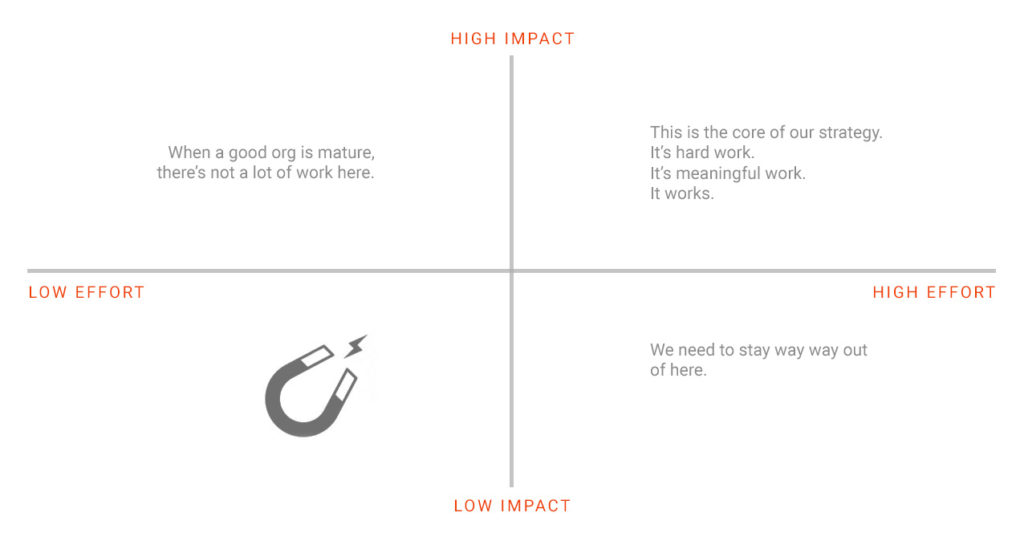
Marketing teams need to ensure they maximize the use of their resources by putting a relentless focus on high-impact work.
About Growth Method
Growth marketing only delivers on its promise if the testing loop actually gets run: hypothesis, experiment, measurement, and a decision on what’s next. Growth Method is the agentic marketing platform built for exactly that discipline: plan your marketing campaigns, launch them, and let AI agents track results against your real GA4, PostHog and Search Console data, so “test and learn” becomes a repeatable workflow your whole team, people and agents, can run together.
If you’re trying to move your team from big, one-off campaigns toward a genuine growth marketing process, or you’re scoping what a growth marketing manager should own, get started and see how Growth Method can run your next test end-to-end.
Frequently asked questions
What is growth marketing?
Growth marketing is a data-driven, experimentation-led approach to marketing that replaces one-off campaigns and gut-feel decisions with a continuous cycle of testing, measuring, and iterating toward a company’s key growth metrics.
How is growth marketing different from traditional marketing?
Traditional marketing typically relies on big, one-off campaigns and brand intuition. Growth marketing instead runs smaller, rapid experiments informed by real customer data, then doubles down on whatever the data proves works.
What is the growth marketing process?
Most growth marketing processes follow a repeatable loop — deeply understand your customers, run structured experiments, measure results against your goals, and rapidly execute on what wins. See our full guide to the growth marketing process for a step-by-step breakdown.
Who uses growth marketing?
Growth marketing was pioneered by fast-growing software companies like HubSpot, and is now used by teams of every size, from early-stage startups to large enterprises, wherever there’s a clear growth goal and a mandate to test rather than guess.