
Table of contents
Whilst most comparison articles provide a differentiation just on the features of the tools, I’ve decided to go deeper and make a comparison of products’ principles and concepts. I’ve used ClickUp for marketing projects in the past, and used Asana for my previous agency business, so know them both well. I revisited both for this article, testing them both in depth to see how they compare.
Disclaimer: All information is correct as of September 2026. To report any incorrect or outdated information, please get in touch with us. For more information on Growth Method features and functionality, get started here.
Prefer a focused two-way comparison? See ClickUp vs Growth Method and Asana vs Growth Method.
ClickUp vs Asana vs Growth Method - at a glance
ClickUp: A comprehensive task and project management tool, ClickUp offers extensive customisation options and a variety of views for managing workloads and team collaboration.
Asana: Known for its user-friendly interface, Asana provides streamlined task and project management capabilities, focusing on clarity and simplicity in organising work and team collaboration.
GrowthMethod: Specifically designed for growth marketing, GrowthMethod integrates goal tracking, idea management, and agile experimentation, catering to marketing teams seeking to optimize their growth strategies.
ClickUp vs Asana vs Growth Method - key differences
For marketing teams, the specialisation and focus of ClickUp, Asana, and GrowthMethod present key differences:
-
Generalist Approach: ClickUp is a versatile project management tool suitable for a wide range of industries, including marketing.
-
Customisation: It offers extensive customisation, which can be particularly beneficial for marketing teams with diverse or complex workflows.
-
Broad Feature Set: ClickUp’s features, such as task management, collaboration tools, and detailed reporting, are not specifically tailored for marketing but can be adapted to fit various marketing needs.
-
Versatile Project Management: Like ClickUp, Asana is a general project management platform that is adaptable to various industries, including marketing.
-
User-Friendly Interface: Known for its clear, intuitive interface, Asana is suitable for straightforward marketing campaign management and team collaboration.
-
General Features for Diverse Needs: Asana’s features, such as timeline views, task dependencies, and project templates, while not marketing-specific, can effectively support marketing project planning and execution.
-
Marketing and Growth Focus: GrowthMethod is specifically designed for marketing teams, with a strong emphasis on growth marketing strategies.
-
Specialized Features: It offers specialized features like goal tracking, idea management, agile experimentation, and custom reports, which are particularly relevant for marketing teams focused on growth hacking and data-driven strategies.
-
Tailored for Marketing Objectives: The tool’s focus on marketing-specific methodologies like idea scoring and agile approaches aligns closely with the needs of growth-focused marketing teams.
In summary, while ClickUp and Asana offer flexible and adaptable project management solutions for a variety of industries, including marketing, GrowthMethod stands out for its specific focus on marketing and growth-oriented strategies. This specialization makes GrowthMethod potentially more aligned with the needs of marketing teams that prioritize growth hacking and performance metrics in their projects.
ClickUp vs Asana vs GrowthMethod - features table
| Feature | ClickUp | Asana | GrowthMethod |
|---|---|---|---|
| Task Management | Comprehensive task management with customisable statuses and priorities | Streamlined task management with clear assignments and due dates | Task prioritisation aligned with marketing and growth objectives |
| Project Management | Diverse project views, extensive customisation, and hierarchy management | User-friendly project templates and timeline views | Agile project management tailored for marketing strategies |
| Collaboration Tools | Chat, document sharing, and real-time editing | Task comments, project messages, and team pages | Collaborative idea repository and shared workspace for marketing teams |
| User Interface | Highly customisable, suited to varied preferences | Simple, intuitive, quick to adopt | Designed specifically for marketing teams with a focus on growth |
| Reporting & Analytics | Detailed reporting with custom reporting capabilities | Basic reporting focused on project milestones and goals | Marketing-focused reporting, including analytics on experiments and campaigns |
| Specialised Features | Time tracking, Gantt charts, nested subtasks, Super Agents | Task dependencies, milestones, approval workflows, AI Teammates | Goal tracking, idea scoring, and agile experimentation for marketing |
| Integrations | Wide range of productivity and management integrations | Integrates with most popular work and collaboration tools | Integrates with key marketing and analytics tools (GA4, PostHog, GSC, HubSpot) |
| Pricing for agencies | $7-$19/user/month (Unlimited to Business Plus); AI add-on from ~$7-9/user/month | $10.99-$24.99/user/month (Starter to Advanced); free Personal plan for up to 10 users | $150/user/month flat, with AI usage passed through at cost |
AI Agents: How ClickUp and Asana Compare
Both ClickUp and Asana have made significant AI investments, but with different approaches:
ClickUp has launched Super Agents — autonomous, long-running agents with memory that can execute multi-step workflows. In June 2026 it replaced its original Brain assistant with Brain 2, which adds full workspace context and routes between Claude, GPT and Gemini models. ClickUp also offers Brain MAX (a standalone AI assistant app) and acquired Codegen for code-generation capabilities. The approach is consistent with ClickUp’s philosophy: more features, more options, more configuration.
Asana has launched AI Studio and AI Teammates — agents that operate as first-class workspace participants with their own profiles. Asana’s differentiator is the Work Graph, which gives agents rich context about the relationships between tasks, projects, goals, and people. Agents provide transparent, step-by-step checkpoints so users can see and control what the agent is doing.
Both approaches are impressive for general project management. But neither platform’s AI agents understand growth marketing. ClickUp’s Super Agents can automate workflows but cannot analyse experiment results. Asana’s AI Teammates can triage requests but cannot suggest the next hypothesis to test. For growth marketing teams, purpose-built AI that understands experimentation methodology is more valuable than general-purpose agents bolted onto a horizontal platform.
For a closer look at ClickUp’s AI/agent side specifically, including how its official MCP server compares to third-party options, see our ClickUp MCP Server guide.
About Growth Method
Growth Method is the agentic marketing platform for B2B teams: plan your strategy, launch campaigns, and analyse what worked, all in one place, for people and agents. Where ClickUp and Asana are generalist tools that marketing teams reshape to fit growth work, Growth Method starts from the opposite premise: every campaign begins with a hypothesis tied to a team goal, moves through a structured plan-launch-analyse cycle, and reports back against your connected analytics stack (Google Analytics, PostHog, Google Search Console and more) automatically.
For an agency running comparison content, paid campaigns, and client reporting side by side, that means less time reconfiguring boards to fit growth work, and more time running the campaigns that move client KPIs. Pre-built AI agents can draft, prioritise, and even launch campaigns from your live data, always stopping to hand back to a human when a step needs one.
If you’re moving from ClickUp or Asana, our team runs a free white-glove migration so your backlog and campaign history come across with you. See our ClickUp alternatives and Asana alternatives guides for a wider comparison.
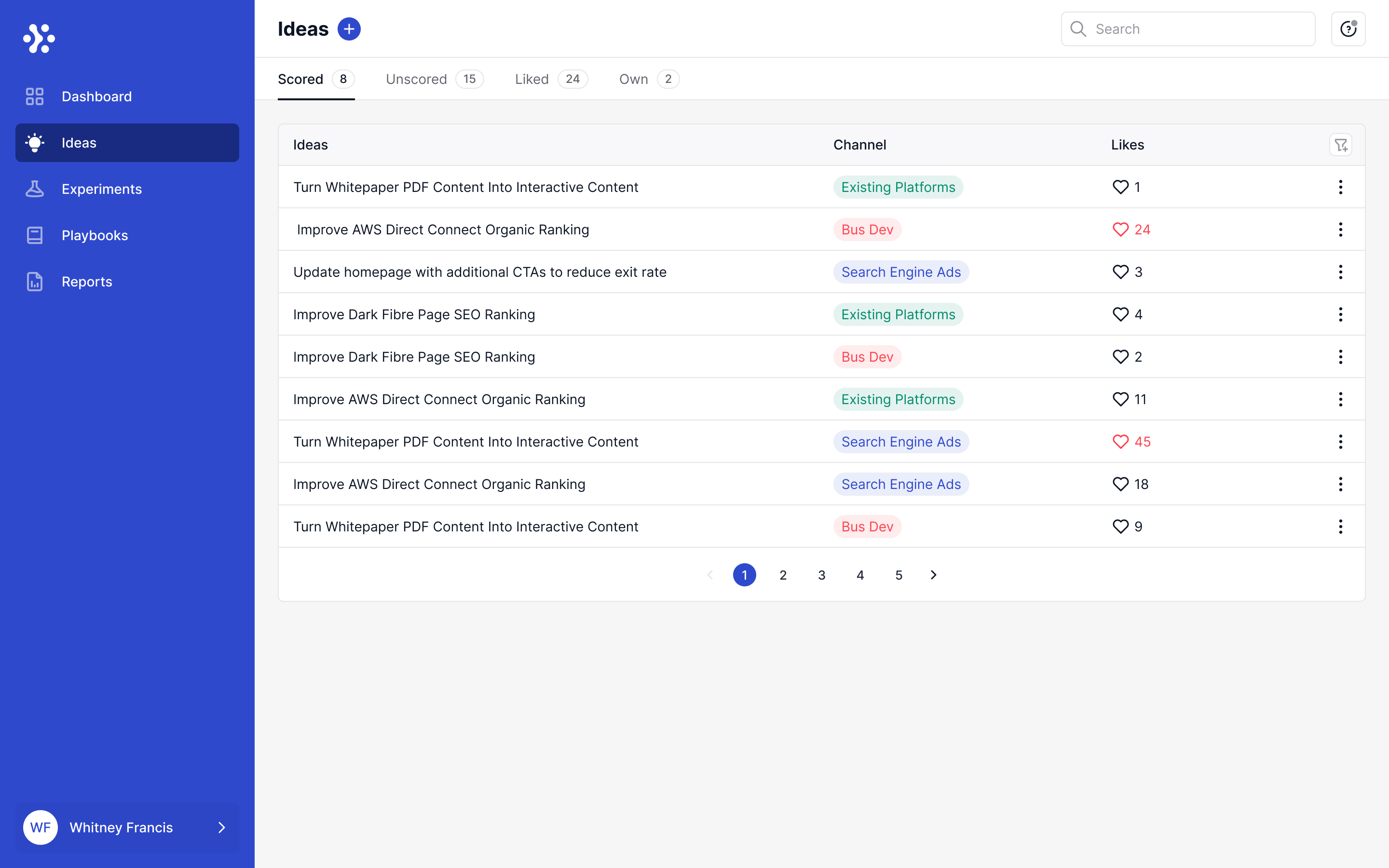
Get started to connect your marketing stack and launch your first campaign within days.
Frequently asked questions
Is ClickUp or Asana better for marketing agencies?
Both are general-purpose project management tools rather than marketing-specific platforms. Asana’s cleaner interface and portfolio view suit agencies juggling several client accounts, while ClickUp’s deeper customisation fits agencies with more varied client workflows. Neither ties tasks to campaign outcomes or client KPIs out of the box, which is where a purpose-built platform like Growth Method differs.
Which is cheaper for a small marketing agency, ClickUp or Asana?
ClickUp is the cheaper entry point: its Unlimited plan starts at $7 per user per month, versus $10.99 for Asana’s Starter plan. At the mid tier, ClickUp Business ($12/user/month) is also less than Asana Advanced ($24.99/user/month), though Asana’s free Personal plan covers up to 10 users for agencies not yet ready to pay.
Does ClickUp or Asana integrate better with client reporting tools?
Both connect to common reporting and automation tools like Slack, Google Drive and Zapier, but neither natively ties tasks to marketing metrics such as MQLs, campaign ROI or organic traffic. Agencies typically still export to a BI tool or client deck by hand. Growth Method connects directly to Google Analytics, PostHog, Google Search Console and HubSpot, so campaign results are ready to share without manual exports.
What should a marketing agency use instead of ClickUp or Asana?
If your agency’s deliverable is running and reporting on marketing campaigns for clients rather than tracking generic tasks, look at a platform built around that workflow, like Growth Method. A free white-glove migration moves your existing ClickUp or Asana backlog across, so switching does not mean rebuilding your history by hand.