
Table of contents
Definition of an agile kanban board
An agile kanban board is a visual board with a column for each stage of your workflow and a card for every task, moved across as work progresses. Its defining rule is a limit on work in progress, which keeps the team finishing work rather than starting more.
An agile Kanban board is a visual tool that helps teams manage their work more effectively. It’s a simple concept: you create a board and divide it into different columns, each representing a stage in your workflow. You then add cards to the board, each card representing a task. As you progress with your tasks, you move the cards across the board. This gives everyone a clear view of what’s being worked on, who’s doing what, and where something is in a process. It’s a great way to boost productivity and keep everyone on the same page.
Agile Kanban boards are not just about visualising work, but also about improving the flow of work. By limiting the number of tasks in progress at any one time, teams can focus on completing tasks rather than starting new ones. This is known as ‘limiting work in progress’ and is a key principle of Kanban. The board also helps identify bottlenecks in the process, allowing teams to address issues and improve efficiency. Furthermore, it encourages collaboration and communication within the team, as everyone can see the status of tasks and who is responsible for them. This transparency leads to increased accountability and a more cohesive team.
Kanban board vs sprint board vs task board vs scrum board
All four boards use columns and cards. The difference is whether work runs in fixed blocks and how much work is allowed in progress.
| Board | Time frame | Work in progress limits | Best for marketing teams that |
|---|---|---|---|
| Kanban board | Continuous flow | Explicit limits per column | Handle a steady stream of requests |
| Sprint board | Fixed sprint, usually 1 to 2 weeks | Set by sprint capacity | Plan and ship in batches |
| Task board | Open ended | Optional | Want a simple shared view of work |
| Scrum board | Fixed sprint | Set by sprint capacity | Follow the full Scrum framework |
To see kanban applied to campaigns, read kanban marketing. To compare it with sprint-based working, read scrum marketing.
How does an agile kanban board work?
An agile kanban board works by providing a visual representation of a project’s workflow, allowing marketers to see the status of various tasks at a glance. It is divided into different columns, each representing a stage in the marketing process, such as “To Do,” “In Progress,” and “Completed.” Tasks or projects are represented as cards that move from one column to the next as they progress. This system promotes efficiency and flexibility, as it allows team members to quickly identify bottlenecks, prioritize tasks, and adjust their workload in response to changes or new priorities. It also fosters transparency and collaboration, as everyone can see what others are working on and where they might need help.
An example of an agile kanban board
Board Name: Growth Method Agile Kanban Board
Backlog
- Improve user interface design
- Develop new customer analytics feature
- Fix bug in payment processing
- Update privacy policy
- Implement two-factor authentication
To Do
- Research competitors’ pricing strategies
- Plan email marketing campaign
- Design new logo
In Progress
- Develop mobile app version
- Test website load speed
- Revise onboarding process
Testing
- Check new security updates
- Validate new customer feedback feature
Done
- Launch customer referral programme
- Update website SEO
- Complete annual financial audit
Each task on the board is represented by a card. The card moves from left to right as it progresses through the stages of the workflow. The board is updated regularly to reflect the current state of work.
Questions to ask yourself
As a modern growth marketing or agile marketing professional, ask yourself the following questions with regard to an agile kanban board:
-
Have I clearly defined and prioritised the tasks on my Agile Kanban board?
-
Am I regularly updating the board to reflect the real-time progress of my marketing projects?
-
Is the Agile Kanban board helping me to identify bottlenecks and improve the efficiency of my marketing processes?
-
Am I effectively using the board to facilitate communication and collaboration within my marketing team?
-
Does the Agile Kanban board align with my growth marketing strategies and objectives?
Other articles you might like
Here are some related articles on boards and agile marketing.
About Growth Method
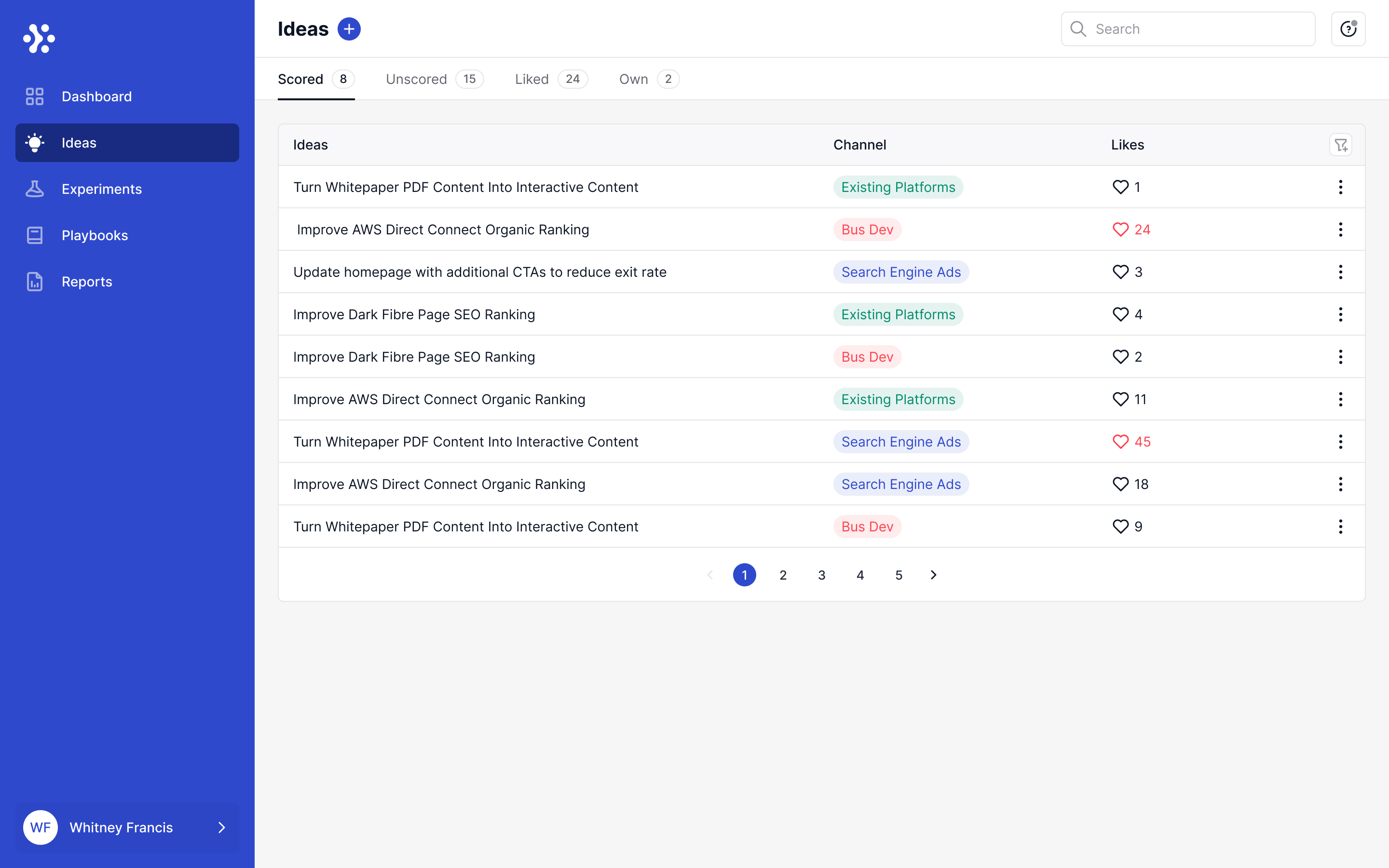
Growth Method is the agentic marketing platform for B2B teams: plan your strategy, ship campaigns and learn what works, all in one place, for people and agents. Our view is that limiting work in progress is only half of flow; the other half is knowing which work to pull next. In Growth Method, campaigns move across a built-in Kanban-style board of five stages, from Backlog to Complete. Ideas are ranked by their likely effect on your one goal, so the next card you pull is the one most likely to matter, and it is measured from launch. Read more about the agentic marketing approach.
Get started: first month free, no credit card required.
Frequently asked questions
What is an agile kanban board?
An agile kanban board is a visual board with a column for each stage of your workflow and a card for each task. Cards move across the board as work progresses, and limits on work in progress keep the team finishing work rather than starting more.
What is the difference between agile and kanban?
Agile is a set of values and principles for delivering work in small, adaptable steps. Kanban is one method for putting those principles into practice, using a visual board and limits on work in progress. Teams often combine the two.
Is there a free agile kanban board?
Yes. You can run a free agile kanban board with a whiteboard and sticky notes, or use the free plan of many digital tools. What matters is the columns, the cards and the work in progress limits, not the software.
What is a kanban card?
A kanban card represents one task or work item on the board. It usually shows a title, an owner and a due date, and it moves from column to column as the work progresses.