
Table of contents
- Compare growth experiment templates at a glance
- Growth Method’s growth experiment template
- Growth Hacking Experiments Template by Pipefy
- Growth Experiments Template, by Airtable
- Growth Experiments Template, by Trello
- Growth Experiments Template, by Miro
- Growth Experiment Board, by Notion
- Test your business hypothesis with growth experiment template, by Figma
- Growth Experiments Template, by Infinity
- Growth Hacking Experiments Template, by Stackby
- Growth Hacking Experiment Sheet, by Grow with Ward
- Growth test template & sample test, by Growth Minded
- Experiment Doc, by Systm (previously Startup Core Strengths)
- Hypothesis Testing Trello Board, by Intrapreneur Nation
- Final thoughts
- About Growth Method
- Frequently asked questions
A growth experiment template gives your team a shared, repeatable structure for testing marketing campaign ideas: what you’re testing, why, and what counts as a result. It can get a new growth team up and running quickly, or inform a more custom implementation. If you are new to the method behind it, start with our guide to marketing experimentation.
Growth Method has a native template built into its plan-launch-analyse workflow (see below). If you’d rather set one up yourself, we’ve compared 12 free alternatives too, from Airtable and Trello boards to Notion, Miro and Google Docs. Here’s how all 13 compare at a glance.
Compare growth experiment templates at a glance
| Template | Format | Best for | Limitations |
|---|---|---|---|
| Growth Method | Built-in campaign workflow | Teams who want hypotheses, baselines and results tied to one goal automatically | Requires a Growth Method account |
| Pipefy | Kanban / list board | Lightweight, no-code process orchestration | No built-in analytics or goal tracking |
| Airtable | Spreadsheet-database hybrid | Small teams wanting more structure than a spreadsheet | Manual setup and upkeep |
| Trello | Kanban board | Teams already using Trello | Gets restrictive as experiment volume grows |
| Miro | Visual whiteboard | Brainstorming and visualising the pipeline | No database functionality |
| Notion | Board + database | Teams already running their wiki in Notion | Manual tracking, no automation |
| Figma (FigJam) | Whiteboard | Design-led teams already in Figma | Same whiteboard limits as Miro |
| Infinity | Flexible workspace | Airtable-style fields at a lower price point | Smaller ecosystem and community |
| Stackby | Spreadsheet-database hybrid | Teams comparing Airtable alternatives | Less developed than Airtable or Infinity |
| Grow with Ward | Google Sheet | Solo marketers or consultants wanting something free | Spreadsheet UX limits at scale |
| Growth Minded | Google Doc | Teams wanting a written template with a worked example | Manual, no tracking or automation |
| Systm | Google Doc / PDF | A single-experiment worksheet | One experiment at a time, no backlog view |
| Intrapreneur Nation | Trello board | Lean startup or internal innovation teams | Built for internal startups, less marketing-specific |
Growth Method’s growth experiment template
Growth Method’s growth experiment template isn’t a static board you fill in once and forget. It’s built directly into the campaign workflow: every marketing campaign starts as a hypothesis (if we do X, then Y will happen, because Z), moves through Planning and Live, then gets analysed against a before/after baseline captured automatically from your connected analytics.
That means you don’t need to separately track the hypothesis in one tool, the task in another, and the result in a spreadsheet somewhere else. Not every idea needs the full workflow either: a quick minimum viable test can validate the riskiest assumption first, before you commit to a full A/B test or campaign build.
Get started to try the template inside Growth Method, or keep reading for a closer look at the 12 free alternatives.
Growth Hacking Experiments Template by Pipefy
“Pipefy accelerates digital transformation. It is a low-code/no-code process orchestration platform that gives anyone the power to easily automate workflows and manage business processes with no coding skills required!”
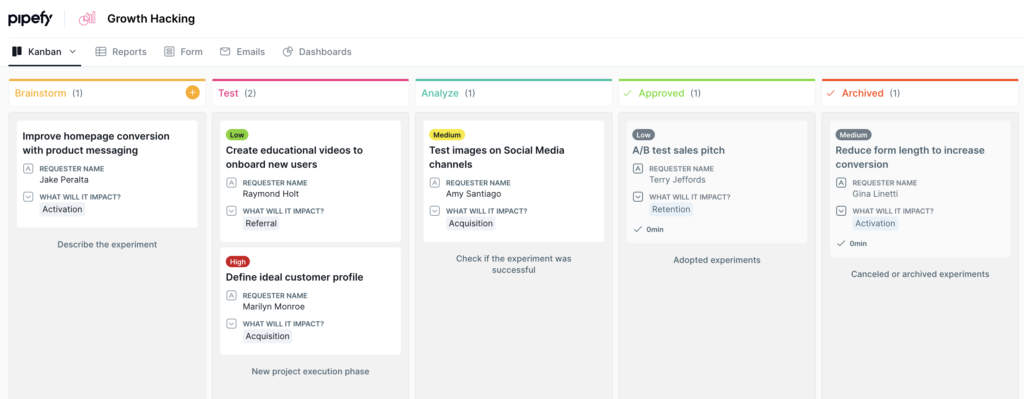
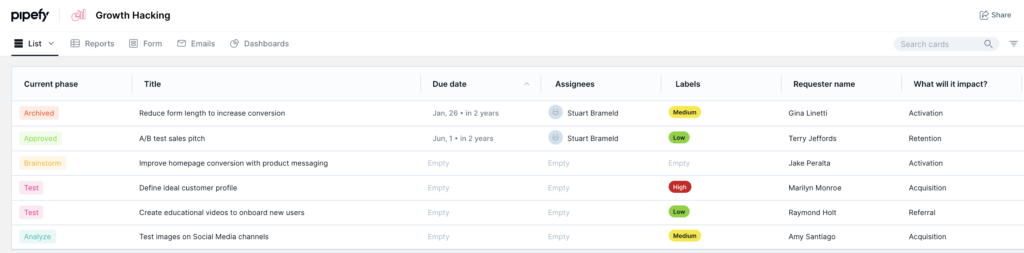
The Growth Hacking Experiments Template was developed by the 500 Startups Distro Team, and inspired by Brian Balfour (ex Growth VP at HubSpot). Similar to Airtable, Trello and others, you can switch between Kanban and list-style views.
Growth Experiments Template, by Airtable
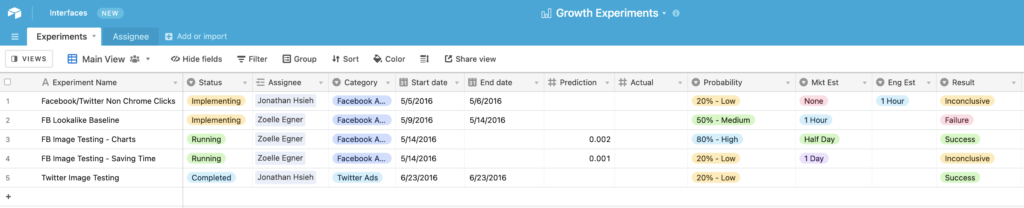
Airtable has the simplicity of Excel, with the power of a database. It is a great option for small or new growth teams that would like to get up and running quickly, safe in the knowledge that it will likely be able to cater for most future needs.
Airtable was founded on the belief that software shouldn’t dictate how you work—you should dictate how it works. Our mission is to democratize software creation by enabling anyone to build the tools that meet their needs.
Our article on Airtable for growth marketing provides a detailed explanation of how to setup a custom Airtable growth marketing solution.
Airtable has a number of growth experiment templates and resources to help growth marketing teams, including:
Airtable previously offered separate “Planning and Execution” and “Checklist” templates for growth experiments specifically; these have since been folded into the main Growth Experiments Template linked above.
Growth Experiments Template, by Trello
Trello, now owned by Atlassian, is likely the most well-known project management tool in this list.
Trello helps teams move work forward. Collaborate, manage projects, and reach new productivity peaks. From high rises to the home office, the way your team works is unique—accomplish it all with Trello.
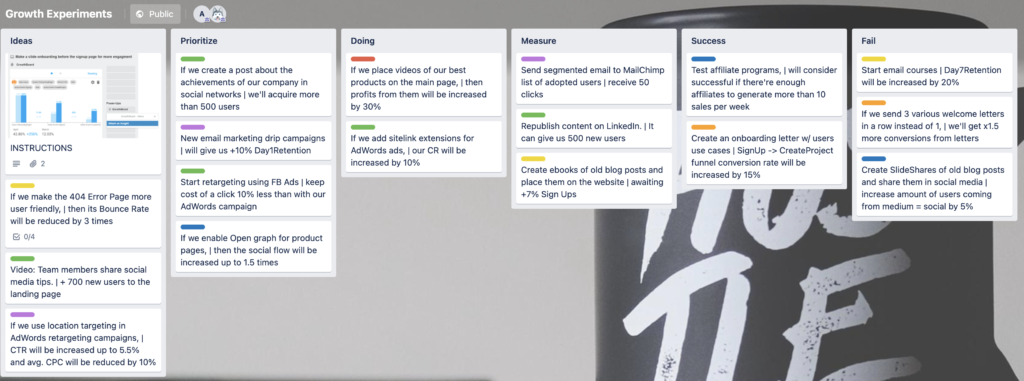
The Growth Experiments Trello Board template is a typical kanban-style board with 6 columns - Ideas, Prioritise, Doing, Measure, Success and Fail. The advantage to Trello is likely the familiarity you and your team already have with the tool. The disadvantage is that it may become restrictive as the number of ideas and experiments grow, and the UI can be limiting at times.
Growth Experiments Template, by Miro
Miro is a collaborative online whiteboard built for visualising ideas with teams in real time, from brainstorms to agile workflows.
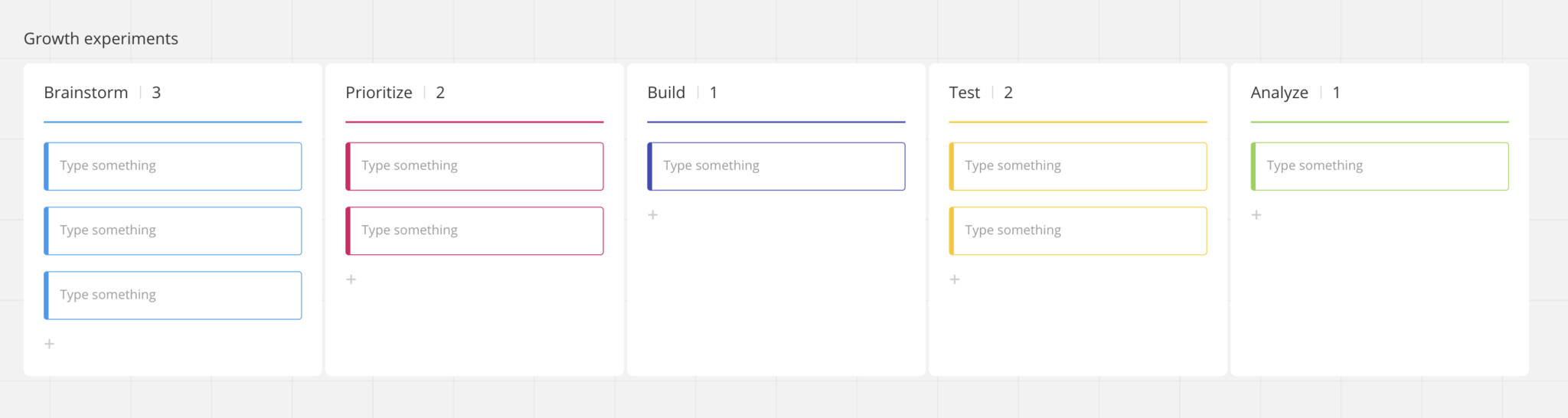
The Growth Experiments Template is a Kanban-style board (Brainstorm, Prioritize, Build, Test, Analyze) that’s useful for visualising your experiment pipeline, but it lacks the database functionality of Airtable or Infinity, so its use is fairly limited once you have more than a handful of active tests.
Growth Experiment Board, by Notion
Notion is a flexible workspace that combines notes, databases and task lists in one place.
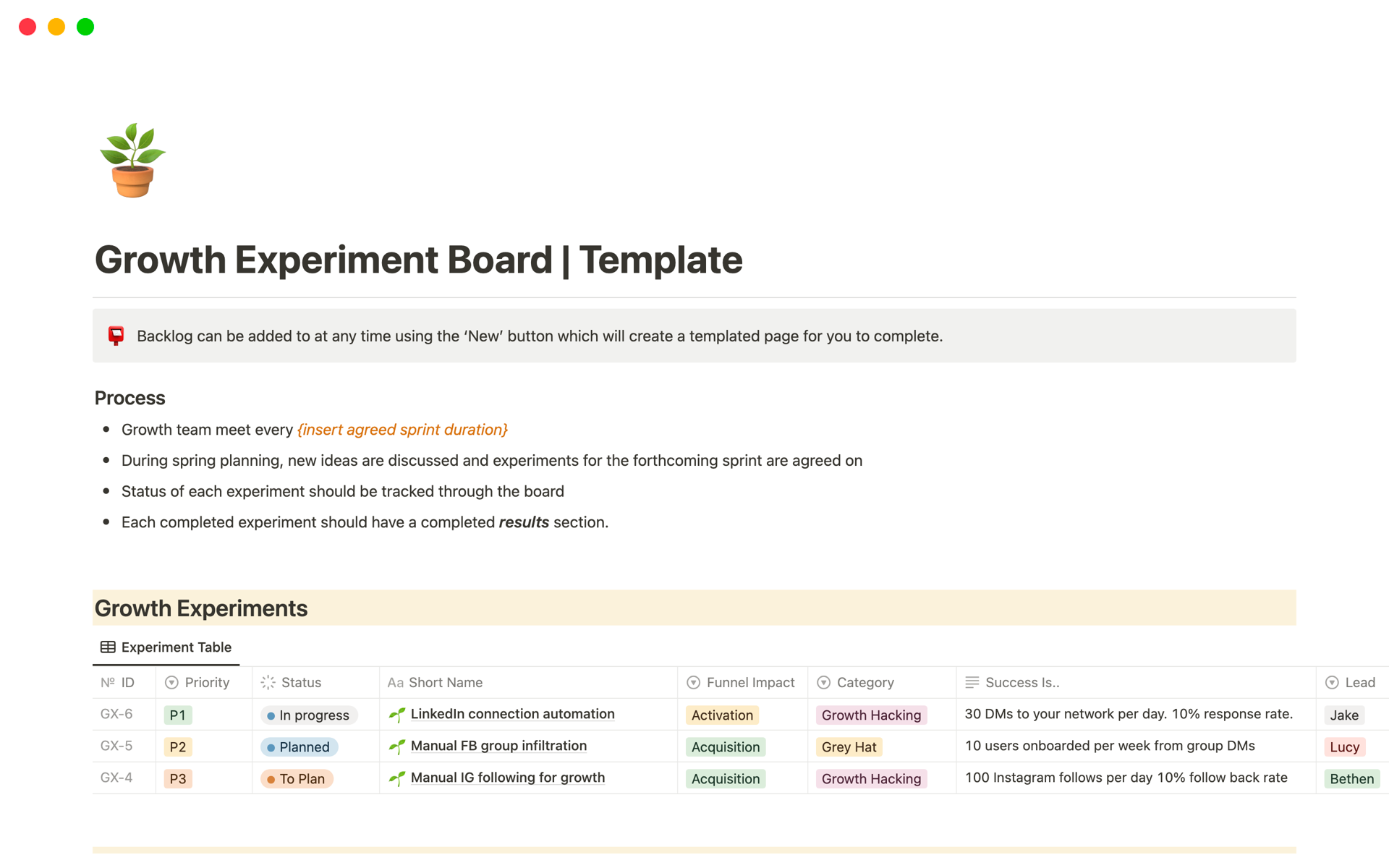
This Growth Experiment Board template, built by the ‘In Growth We Trust’ podcast, gives marketing and growth teams a simple board to collect, organise and track experiments. It’s a lightweight starting point rather than a purpose-built experimentation tool, so tracking and reporting stay manual.
Test your business hypothesis with growth experiment template, by Figma
FigJam is Figma’s collaborative whiteboard, built for real-time brainstorming and prototyping alongside a design team.
This FigJam template gives you a Kanban-style board with four columns (Brainstorm, Test, Analyze, Approved) to showcase and test a business hypothesis. It works well if your team already lives in Figma, but shares the same whiteboard limitations as Miro once your experiment backlog grows.
Growth Experiments Template, by Infinity
Infinity is a flexible workspace that combines project tracking, task boards and calendars with customisable fields.
The Growth Experiments Template lets you view ideas and experiments by funnel stage, category or status, and offers similar functionality to Airtable in terms of fields, attributes and activity logs, at a lower price point.
Growth Hacking Experiments Template, by Stackby
Stackby combines spreadsheets, databases and workflow automation in one workspace.
The Growth Hacking Experiments Template covers similar ground to Airtable and Infinity, but is less developed. Worth a look if you have a specific reason to use Stackby, otherwise Airtable or Infinity are the stronger options.
Growth Hacking Experiment Sheet, by Grow with Ward
Grow with Ward is a growth strategy resource run by growth hacker Ward van Gasteren.
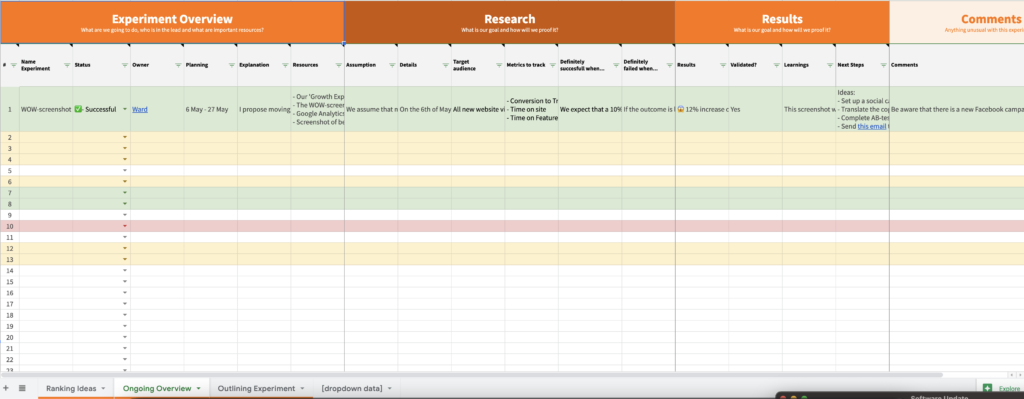
The Growth Hacking Experiment Sheet is a pre-built Google Sheet with separate tabs for ranking ideas, tracking ongoing experiments, and outlining individual tests. It’s thorough, but teams may find the UX of working in Google Sheets limiting once the backlog grows. Ward’s own successor product, Upgrow, is built to solve that.
Growth test template & sample test, by Growth Minded
Growth Minded offers agile marketing and growth coaching built around Scrum, Kanban and Lean methodologies.
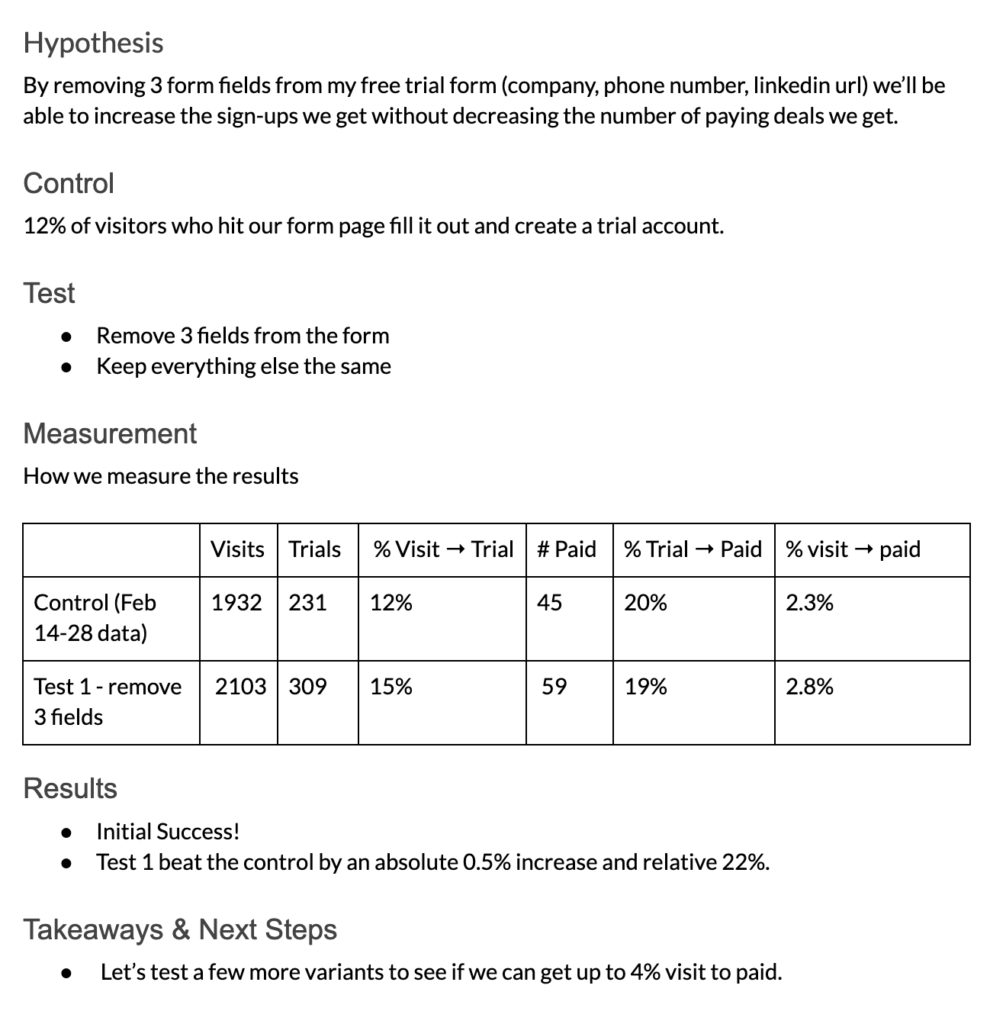
This Google Doc template includes a structure for running a growth test, plus a worked example, making it a useful reference if you want to see a completed experiment before you write your own.
Experiment Doc, by Systm (previously Startup Core Strengths)
Systm, formerly Startup Core Strengths, is a growth consulting firm that helps startups find and focus on their unique growth channels.
We’ve written before about the benefits of an experimentation culture, and about examples of experimentation at companies like Coca-Cola. The Systm team shared the experiment document they use in their own coaching programme, available as a PDF or Google Doc. It’s built for documenting one experiment at a time rather than managing a backlog.
Hypothesis Testing Trello Board, by Intrapreneur Nation
Intrapreneur Nation trains people inside existing companies to develop and test new ideas without starting a separate company.
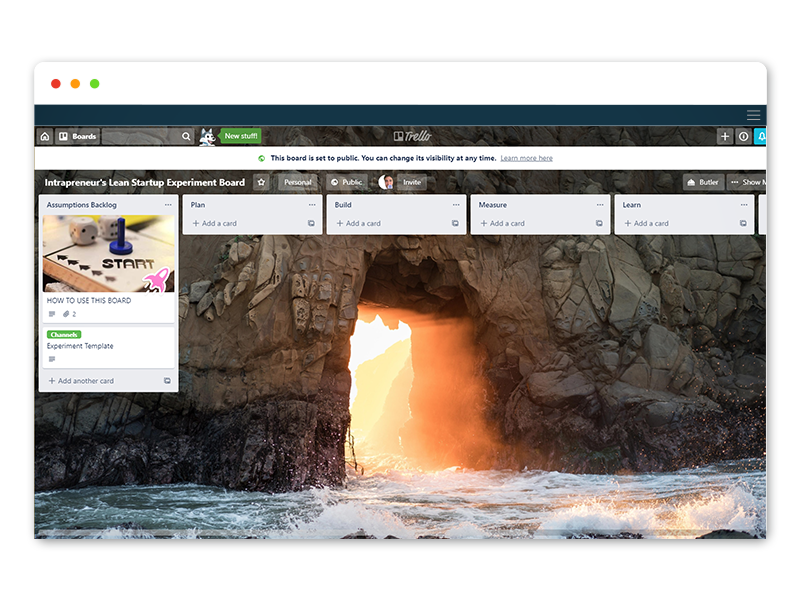
Their Hypothesis Testing Board is a lean, Kanban-style Trello board for tracking lean startup experiments through Plan, Build, Measure and Learn columns. It’s built for internal innovation teams specifically, so some of the language is less marketing-specific than the other templates here.
Final thoughts
There is no “right” way to run experimentation or growth, so use whichever template above helps your team build a process everyone actually follows. Remember, the best process is the one that gets used consistently, not the most sophisticated one on paper.
Got questions? Ping me on LinkedIn, or get started: first month free, no credit card required.
About Growth Method
Running one growth experiment is easy. Building a team habit of testing ideas continuously, capturing a clear before/after result every time, and feeding that into what you test next, is the hard part. That’s exactly what Growth Method is built for: it’s the agentic marketing platform for B2B teams, built for people and agents to plan strategy, ship campaigns, and learn what works, all in one place.
Instead of a growth experiment template living as a static board or spreadsheet row, Growth Method turns each idea into a structured plan-launch-analyse workflow. Every campaign starts with a hypothesis, ties to your team’s growth model and goal, and gets a recorded before/after baseline captured automatically from your connected analytics, so learnings compound instead of getting lost in a backlog.
Get started to run your next growth experiment inside Growth Method.
Frequently asked questions
What is a growth experiment template?
A growth experiment template is a repeatable structure for logging and tracking marketing campaign ideas: the hypothesis being tested, who owns it, what stage it’s at, and what the result was. It gets a new growth team up and running quickly, or gives a more custom implementation a starting structure.
What should a growth experiment template include?
At minimum, a growth experiment template should capture a clear hypothesis (if we do X, then Y will happen, because Z), an owner, a status or stage, a start and end date, and a documented result once the test finishes. More advanced templates also link each experiment back to a team goal and record a before/after baseline.
Is a spreadsheet or a kanban board better for tracking growth experiments?
Neither is universally better. A kanban board (Trello, Pipefy, Miro) suits teams who think visually and want to see ideas move through stages at a glance. A spreadsheet or database (Airtable, Google Sheets, Infinity, Stackby) suits teams who want to filter, sort, and report on experiments in bulk. Most teams outgrow both once experiment volume increases, which is where a dedicated platform helps.
Does Growth Method provide its own growth experiment template?
Yes. Growth Method has a native template built into its plan-launch-analyse workflow, so every campaign starts from a structured hypothesis and automatically gets a recorded before/after baseline, rather than living as a static board or spreadsheet row.